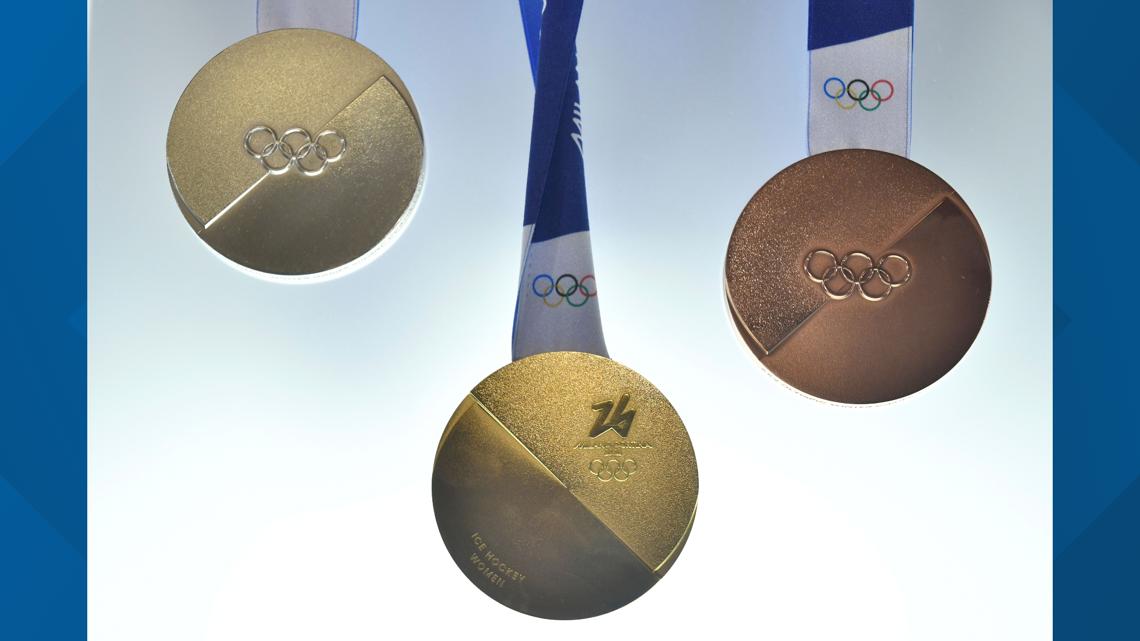


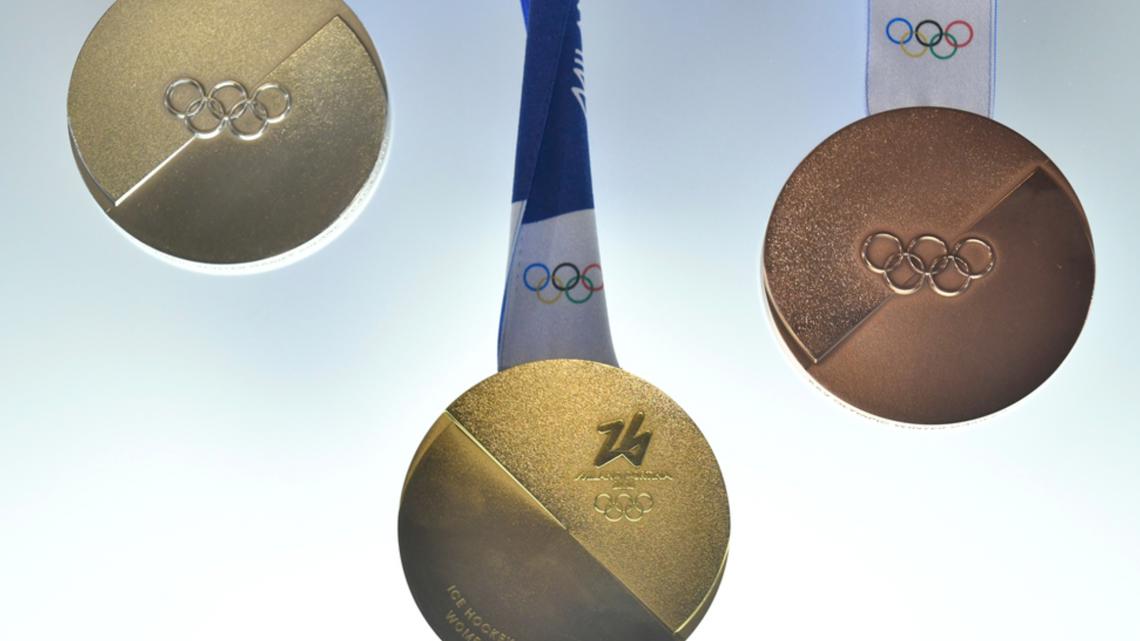
First place gets a gold medal, second silver and third bronze… but is that what they’re really made of?
ITALY, — For athletes across the world, there is perhaps nothing more rewarding than flashing an Olympic medal for people back home to ogle.
But despite the weight in reputation it holds, many spectators have lingering questions about the medals. Is gold really gold? If so, how much is it worth? How much do the medals weigh?
The answer varies depending on the time period of the Olympics you look into.
Origins of Olympic gold medals
The awarding of medals is a relatively new tradition: winners of games in Ancient Greece were traditionally given an olive branch wreath to symbolize glory, peace and wisdom, according to the International Olympic Committee.
Medals can actually be traced back to the 1896 Athens Olympics, where Australia, Austria, Denmark, France, Germany, Great Britain, Greece, Hungary, Switzerland, and the United States of America competed in various sports, from swimming and wrestling to shooting and fencing, according to the International Olympic Committee.
That year, the U.S. took home 20 medals, second only to Greece, which won 47.
In these games, first-place medals were silver, and second-place medals were bronze. There were no tokens for third-place contestants, but they did still keep track of the athletes.
It was said silver and bronze were chosen because they were cheaper than gold, according to Guinness World Records.
Photos of every medal style from 1896 to 2026 are available on the Olympics website here.
Is the gold medal made of real gold?
The simple answer is yes… and no.
They were once solid gold from 1904 through 1912, but are now primarily made of pure silver and plated in gold. The IOC requires gold and silver medals to be made with a minimum of 92.5% pure silver. The gold metals are plated with 6 grams of gold atop the pure silver, giving them their color. All in all, a gold and silver medal weighs just over a pound.
The Milan Cortina Olympic medals are made with 99.9% pure silver and 99.9% pure gold, according to the official Olympics page.
The brief history of medals being solid gold is one of the few reasons athletes may be seen biting into their medals after winning them.
Gold medals aren’t solid gold anymore and silver medals are at least mostly pure silver… What about bronze medals?
This Winter Olympics, they’re made up of 420 grams of copper. In years past, the bronze metal was made with a mix of copper, tin and other metals.