

These five athletes, all supremely talented in their respective fields, opened up on the different facets to their Division 1 careers and how it has surpassed any of their expectations by a country mile.
Facilities – Cash is king
The unofficial mantra “bigger is better” in the States rings true in the college sphere.
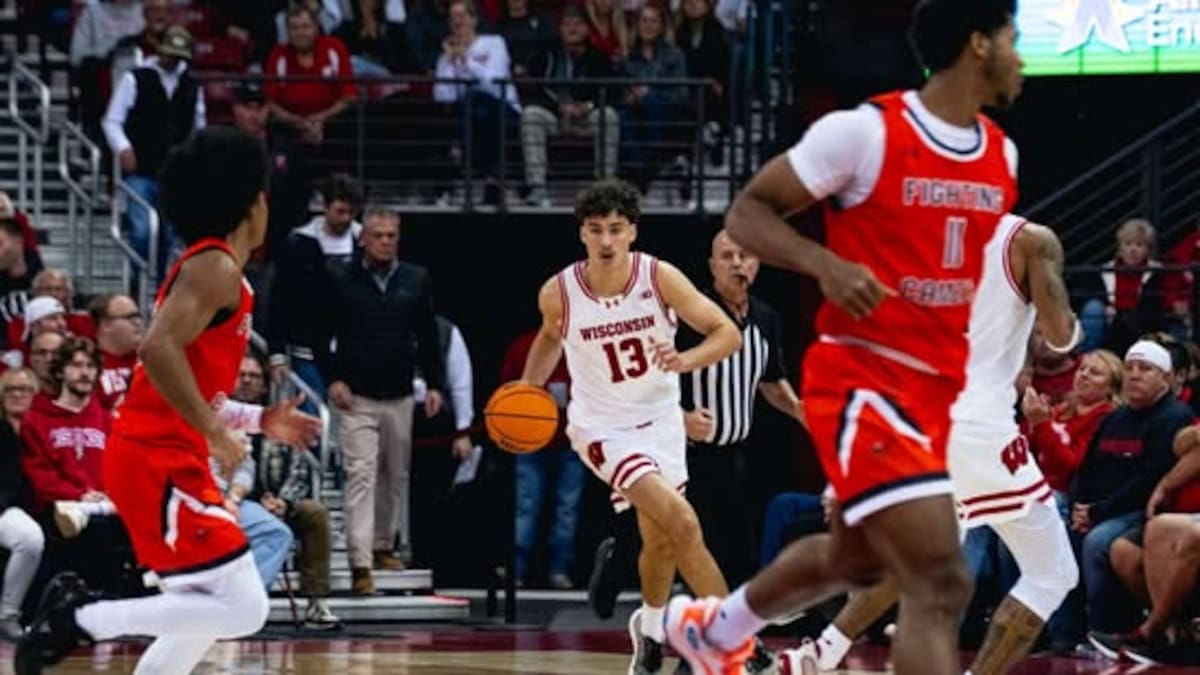
University of Wisconsin freshman basketball product Hayden Jones is no stranger to high-performance environments, but once he first stepped foot on campus, it was clear he was now in a much larger pond.
“I was blown away when I first got here … everything’s really new,” Jones says.
To paint a picture, he describes how his men’s basketball team have access to their own training gym as well as a multi-purpose playing arena, which holds 17,000 people. Almost twice the size of Spark Arena. To complement that, recovery tools such as ice spas and saunas are available for players, and to round it all off, there is “a really nice weights room” that was only built a few years ago.

“It’s pretty cool to see how much they care about us and the kind of facilities and things they give us to use. I’m very grateful for the opportunity that they’ve given me,” Jones adds.
University of California freshman football player Emily Humphrey says before coming to the US, she was used to playing on a “random pitch in a park” in New Zealand.
Now, playing in a stadium with thousands of seats and using a locker room that got a US$10,000 ($17,500) makeover thanks to one anonymous donor alone, Humphrey describes the resources on tap as “a whole new world”.
“The amount of money that is just floating around is insane,” she says.
“We have one physio per team that works literally every day [and] there’s so much recovery stuff that I had never even heard of.”
Similar to Humphrey, UC San Diego freshman swimmer William Seymour says he’s typically trained in a 25m pool his whole life, as the entire South Island only has two Olympic-sized (50m) pools. His new school has two right next to each other.
“We have 20 blocks, perfect depth the whole way, it’s just awesome really. Nothing like I’ve ever seen,” Seymour says.
The sheer amount of financial backing all these sports have is, quite frankly, unquantifiable in New Zealand, especially when there are wealthy alumni ready to open the pockets to increase their chances of their alma mater succeeding.
Indiana University senior golfer Maddie May says she and her teammates often meet with those willing to give back, creating a pinch-yourself feel that you are truly a part of something bigger.
“You walk into one of these million-dollar facilities and you’re just like ‘none of this seems real’. You just cannot compare the amount of money that these schools have to anything you would ever find at home.”

May, who spent her first two years at Ole Miss, says last summer a brand-new golf simulator worth “a good 50 grand” was installed, summarising the programme and school’s never-ending desire to win.
University of Washington rower Ben Shortt says the introduction of players earning off their name, image and likeness (NIL) has only turbo-charged the level of spending, as programmes now want to get the best return on investment for athletes they may now be paying.
“A lot of money gets poured into some really high-quality facilities … the access to resources is tremendous over here,” Shortt says.
Seymour adds that there are now hundreds of collegiate countries who are on a par with high-performance sport in New Zealand, making it a breeding ground for talented athletes.
Fans – Passion personified
It’s borderline impossible to imagine up to 70,000 Kiwis screaming their lungs out for any live sporting event, aside from the All Blacks playing in a World Cup final.
You’d get laughed at if you asked if it could happen to celebrate the success of a national championship-winning men’s rowing side or a conference-winning women’s golf team.
That same request would be welcomed with open arms in the US, which Shortt and May found out first hand as they were walked out on to their respective school’s American football fields during a game to acknowledge their championship titles.
It’s a moment neither will forget.
“It’s a great feeling to be able to have your effort acknowledged like that and to have so many people show their support for the sport, even in a small moment like that,” Shortt says.
“We were walking down and people were just yelling and being like ‘good job’,” May adds.
“I have no idea who these people are, nor do they probably know what women’s golf is. They were just so happy that people had won a championship at IU.”

Moments like that sum up the culture of college sports in a nutshell, as it reaches a feverish level that is hard to quantify against New Zealand sport.
“It is really one-of-a-kind,” Shortt says.
People of all ages were “packing the stadiums and any grandstands and seats along the waterways to come and support teams. It’s just such a developed system and culture that’s really cool to be a part of”.
“In NZ, we get behind sport, but it’s that feeling of belonging to a school that I feel like is a lot bigger,” Humphrey adds.

Jones references how he and his teammates will get multitudes of people coming up to them on campus expressing their support, only adding to the belief that they are playing for a community that is so tightly knit.
“I’m definitely excited for the big games … it’s [a] pretty cool atmosphere when they get loud,” he adds.
Education – Four years free
There is one factor that’s key to remember when talking about the college athlete experience – they are students as much as they are athletes, and their respective schools don’t let them forget it.
In the same breath, many of these young athletes weigh the value of a free education the same, if not higher, in comparison to their sporting programme for a gem of a reason; sport doesn’t last forever.
Shortt, who is studying towards a Bachelor of Science and Economics, says his school choice was always going to be tailored around if it fitted his studies wishlist. He describes it as a “tremendous privilege” to obtain a world-class education while doing the sport he loves.
“That’s what I wanted to do and there was a great programme for it here at Washington … it’s a great way to do things,” he adds.
All five athletes echoed how the rollercoaster ride of juggling fulltime study with the 20 extra-curricular hours set for sports (capped by the NCAA) can be testing at the best of times. However, the ways in which their schools provide support, some say, is unparalleled.
“Ultimately, the [New Zealand] universities don’t care that you’re an athlete … you’re just a student to them,” human biology major and medical school hopeful Seymour says.
“Whereas here, I have academic advisors, I have trainers that all work around my schedule, I can do remote exams while I’m away on trips … it’s really catered for you.”
May recalls in her first year at Ole Miss, she was handed a brand-new MacBook for her studies, free of charge. She adds the numerous amounts of personal advisors, trainers and coaches are “solely there to help you”, supplementing the education she’s receiving at Indiana University’s renowned business school.

“It’s huge for me, especially now [as] I’m going through the job-search process and just knowing how valuable my degree is,” she says.
The balance demanded is a refreshing change for Humphrey, as the footballer describes she was “isolated in both aspects” in New Zealand, committing an equal amount of time to her studies and sport.
“Here, the whole point is to do both, so the set-up is really good. I want to play football pro, but life happens, so I think it’s cool to be able to have a degree as well.”
Social media and exposure
Social media has changed the way sport is consumed globally, with US sports leading the way.
All college sports follow that trend: pumping out content is the lifeline behind creating more exposure for the athletes, the programme and the school.
“There’s cameras everywhere … it’s hard to go anywhere without a camera being on you,” Jones says.
Amongst his four separate media days, the freshman describes the change as “a lot different”, but says that he enjoys the process, a slight difference from May.
“If you have a bad round or whatever, you know your score is just going to be posted straight on the Instagram about two hours later for everyone to see,” she says.
“It wouldn’t be my favourite thing to do just because I’m a little bit more shy and stuff for it, but it’s fun … I think it’s cool.”
A byproduct of social media is it heralds a now-unprecedented level of exposure for Kiwi athletes, making the pathway for Division 1 level talent as clear as it’s ever been.
“It’s such a useful tool at the moment to be able to get video highlights and film across to different coaches,” Jones says.
“For kids that might be in my position four, five, six years ago rowing back in high school, being able to see what these universities are up to … it 100% creates a positive image of ‘hey, that could be me one day’,” Shortt adds.
“Having that awareness is just amazing,” Seymour quips.

“I’m sure there are young people that potentially can be inspired to follow their own goals and chase that dream themselves.”
It’s a new age for young athletic talent in Aotearoa. From as early as 12 or 13 years old, those wanting to compete at a high level against arguably some of the world’s best, while gaining an all-expenses-paid education, now have a clear option to do so.
More Kiwis are coming back and sharing their experiences and with the all-powerful social media driving US sports on to New Zealand screens, the pathway may start to shake its minority, alternative label.
For now, these five, among the many others scattered around the US, will no doubt continue to represent their comparatively small South Pacific nation, cementing tickets for Kiwis to one of the world’s biggest dances for years to come.
